
Services
Workflow Automation
Automate repetitive, rule-based tasks and hand-offs to reduce manual work, delays and errors.
The problem we solve
Repetitive, rule-based work — rekeying records, chasing approvals, moving information between systems, sending reminders — consumes staff time and introduces errors. These tasks follow the same steps each time, with a clear trigger, conditions and defined result.
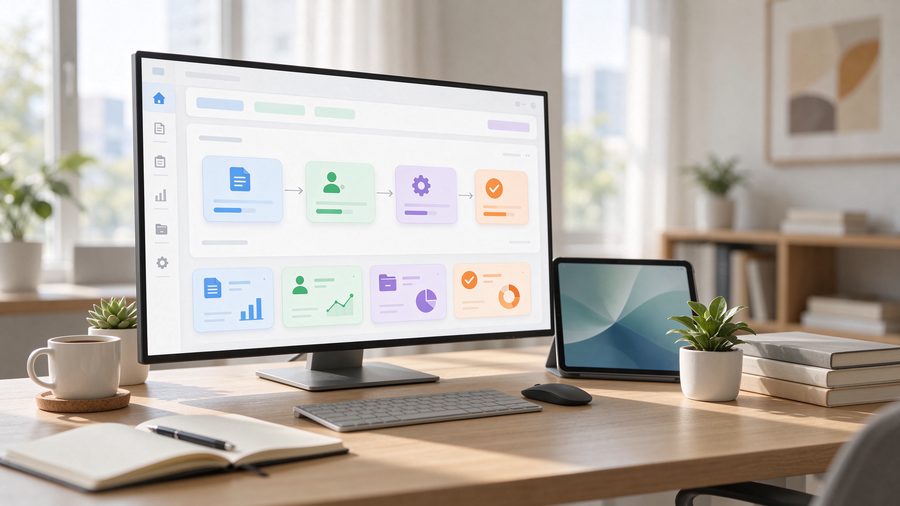
The workflow automation service identifies repeated work, maps the current flow, and designs flows that handle routine tasks and route exceptions to a person. Judgement is left with staff.
What we deliver
- Mapping of current tasks, triggers, inputs and hand-offs
- Automated rule-based process and approval flows
- Movement of information between systems without manual re-entry
- Validation steps and exception handling so unusual cases are surfaced to staff
- Clear logs of what the automation completed and where it needed review
Our approach
We begin by watching the current process: what triggers it, who touches each step, what information moves, and where delays or mistakes appear. The rules people follow are documented explicitly, because a reliable automation must reflect the real decisions staff make, not an assumed version of the process.
The flow is then designed around those rules, with checkpoints that confirm data has been passed correctly and branches for cases that do not fit the standard path. Automation is tested against real examples before it goes live, including the exceptions staff worry about most, so the routine work runs itself and anything unusual reaches a human.
Typical outcomes
- Less manual rekeying and follow-up across recurring tasks
- Faster turnaround on routine, rule-based work
- Fewer transcription, matching and hand-off errors
- Staff time freed for higher-value customer and operational work
Tasks that suit automation first
The strongest automation candidates are tasks that happen frequently, follow a fixed rule, and rarely depend on unusual judgement. Typical examples include matching and reconciling records, updating lists between systems, routing items that meet set criteria, sending status updates, and preparing standard entries for downstream processing. These tasks take up regular staff time and introduce errors when repeated by hand, so removing them produces a clear and measurable saving.
Tasks that depend on negotiation, ambiguous circumstances or changing policy are usually better assisted than automated. In those cases the flow can gather the relevant information and prepare a draft, leaving the decision with the person. We map the current steps before choosing what to automate, so the flow reflects a stable process rather than an inconsistent one, and exception handling is defined before the automation goes live.
Flows handle routine tasks consistently; exceptions are routed to staff with a clear reason.

How automation supports the rest of your data work
Automation connects to integration and reporting: once systems are connected and records are clean, recurring tasks such as updating lists, reconciling entries and sending status updates can be moved into automated flows. Automation is scoped to the specific steps that slow the team.